
Research
Entanglement Distribution in Quantum Networks
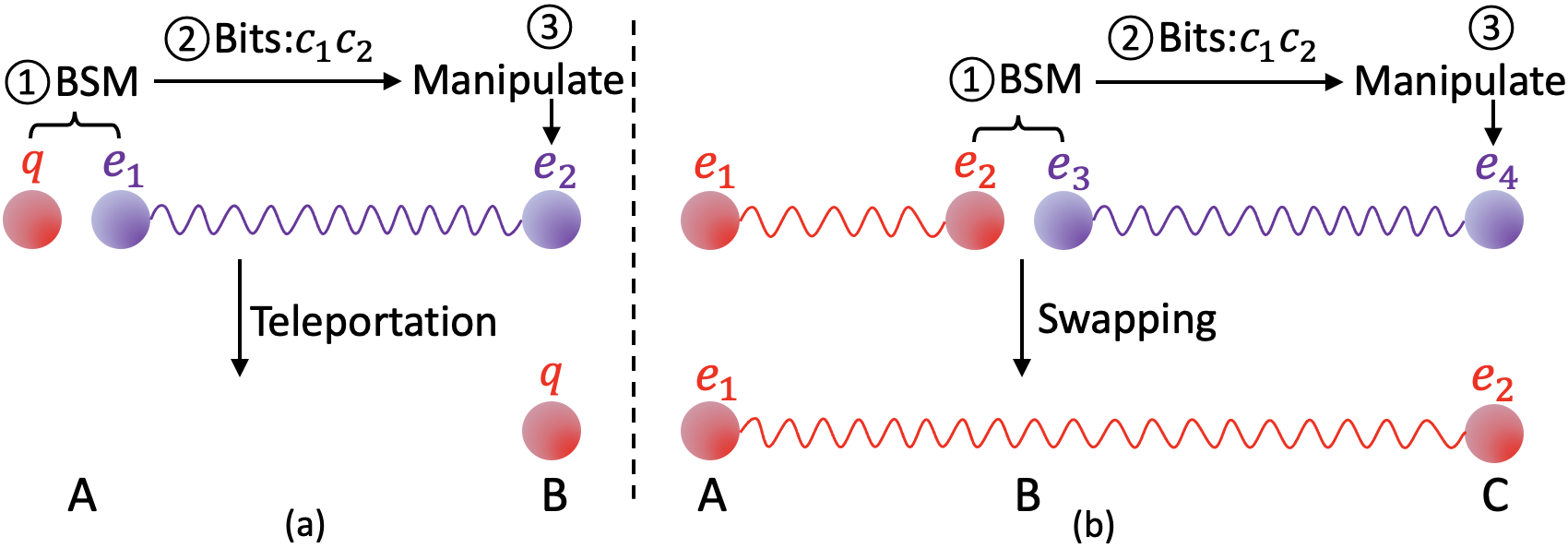
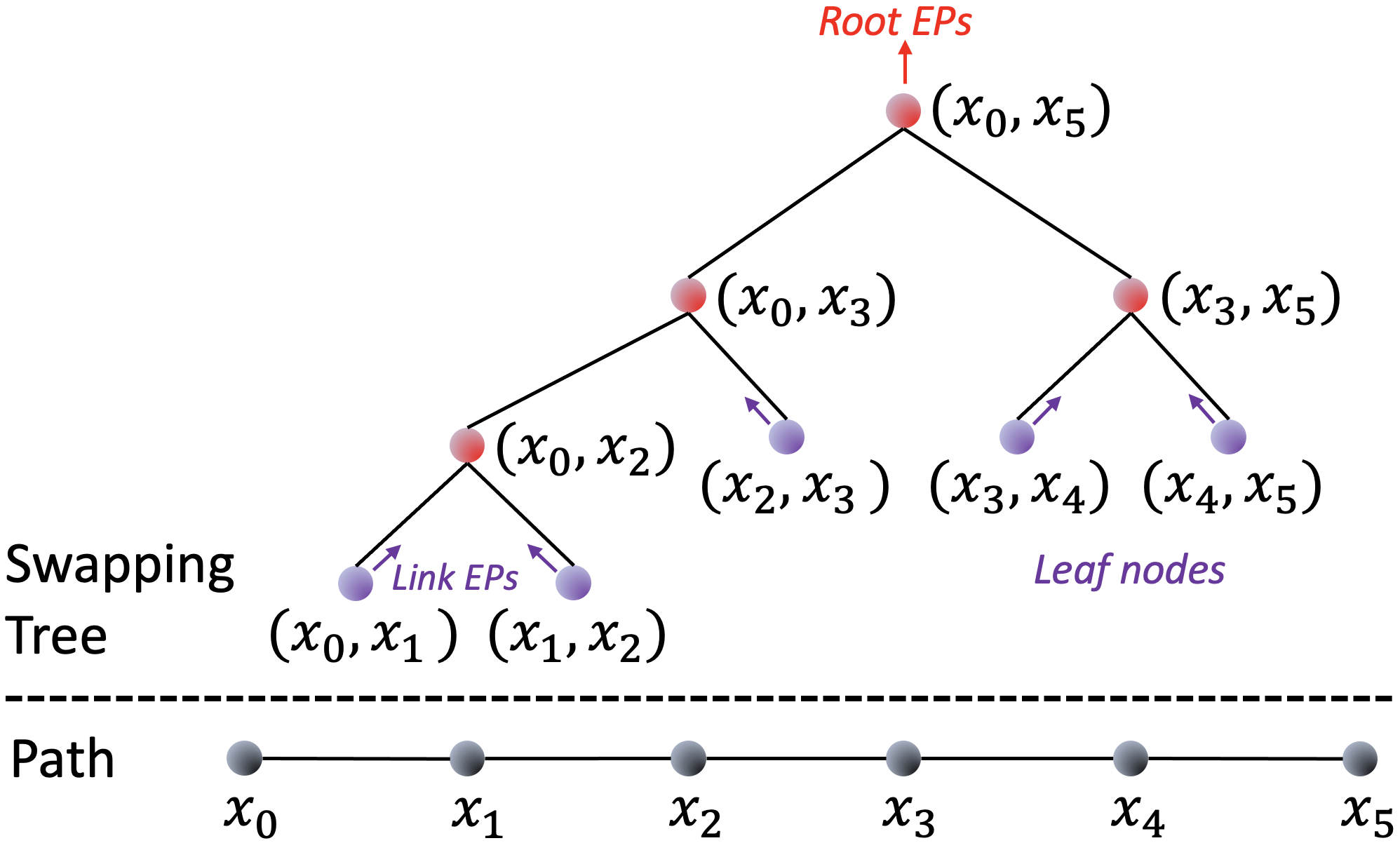
Entanglement distribution is a core building block of quantum networks, allowing distant quantum systems to share nonclassical correlations that cannot be explained by classical physics. This capability underlies applications such as quantum network applications, distributed quantum computing, secure communication, and distributed quantum sensing. My work focuses on the theory and design of protocols that make entanglement distribution scalable, efficient, and robust in real-world settings.
Selected Publications:
- M. Ghaderibaneh, C. Zhan, H. Gupta, C.R. Ramakrishnan. Efficient Quantum Network Communication using Optimized Entanglement-Swapping Trees. IEEE Transactions on Quantum Engineering, 2022. PDF
- M. Ghaderibaneh, H. Gupta, C.R. Ramakrishnan, E. Luo. Pre-distribution of Entanglements in Quantum Networks. IEEE International Conference on Quantum Computing and Engineering (QCE), 2022. PDF; arXiv:2205.04036
- Ranjani Sundaram, Himanshu Gupta. Optimized Generation of Entanglement by Real-Time Ordering of Swapping Operations. IEEE Conference of Quantum Computing and Engineering (QCE), 2024. PDF
- Xiaojie Fan, Yukun Yang, Himanshu Gupta, C.R. Ramakrishnan. Distribution and Purification of Entanglement States in Quantum Networks. IEEE International Conference on Quantum Communications, Networking, and Computation, 2025. PDF
Distributed Quantum Computing
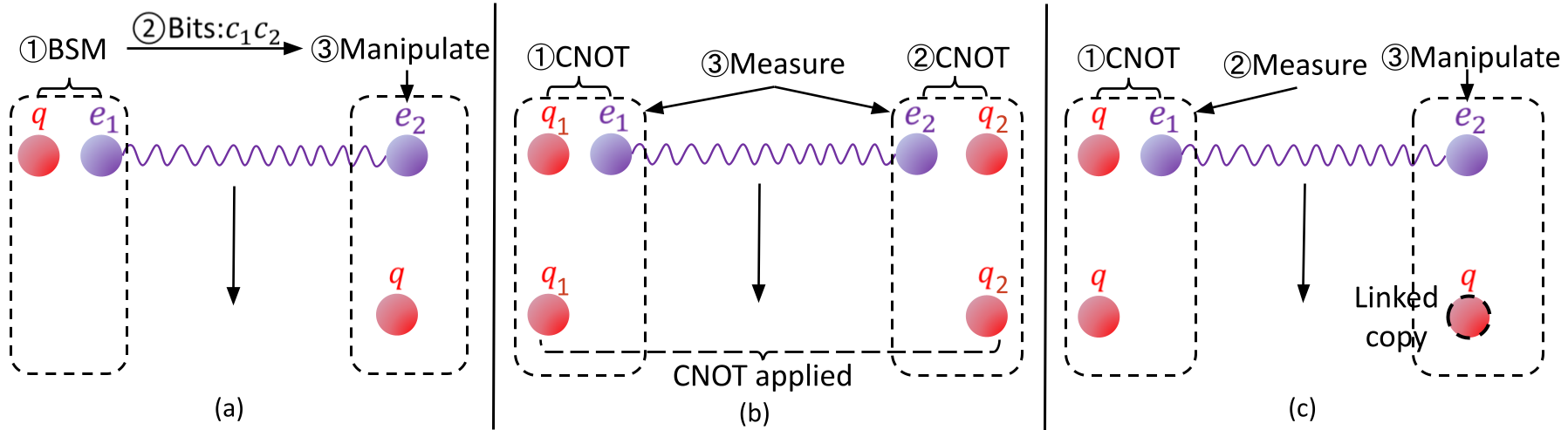
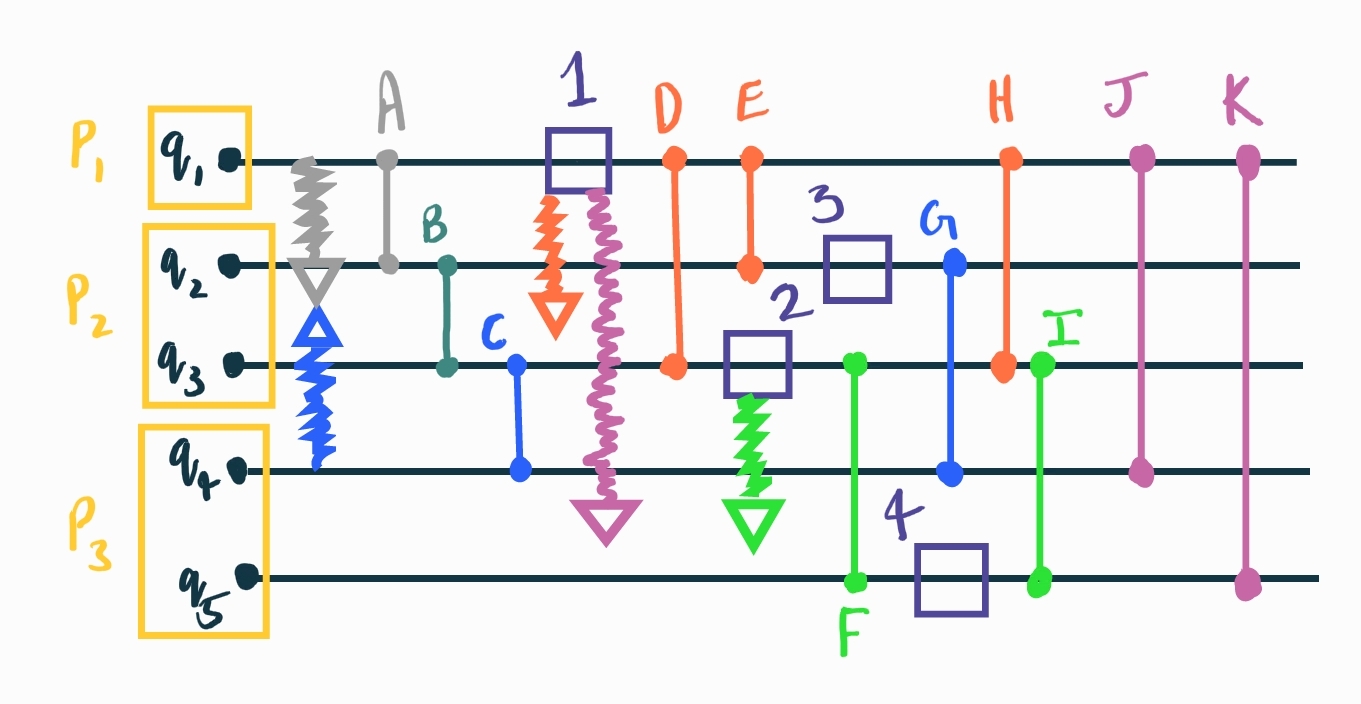
Distributed quantum computing uses networks to link separate quantum processors, enabling them to perform computations collaboratively rather than in isolation. This approach can expand computational scale, improve flexibility, and support modular quantum system design. My work investigates the principles and methods that allow distributed quantum computers to coordinate effectively under realistic physical and network constraints.
Selected Publications:
- Ranjani Sundaram, Himanshu Gupta, CR Ramakrishnan. Efficient Distribution of Quantum Circuits. International Symposium on Distributed Computing (DiSC), 2021. PDF
- Ranjani Sundaram, Himanshu Gupta, CR Ramakrishnan. Distribution of Quantum Circuits in General Quantum Networks. IEEE International Conference on Quantum Computing and Engineering (QCE), 2022. PDF
- Ranjani Sundaram, Himanshu Gupta, C.R. Ramakrishnan. DQC-DR: Distributing and Routing Quantum Circuits with Minimum Circuit Execution Time, ACM Transactions on Quantum Computing, 2025. PDF
- Yukun Yang, Ranjani Sundaram, Himanshu Gupta. Efficient Execution of Multiple Quantum Circuits over a Quantum Network. IEEE Conference of Quantum Computing and Engineering (QCE), 2025. PDF
- Ranjani Sundaram, Himanshu Gupta. Minimizing Qubit Overhead in Error-Aware Distributed Quantum Computing. IEEE International Conference on Distributed Computing Systems (ICDCS), 2026. PDF.
Quantum Sensor Networks
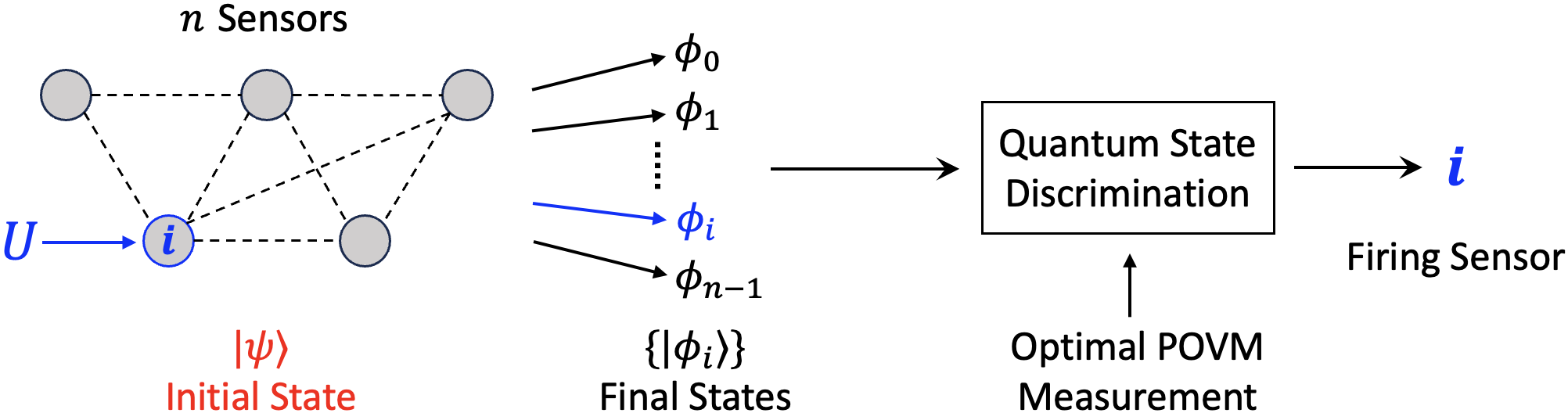
Quantum sensor networks use entangled or otherwise coordinated quantum sensors to measure physical quantities with precision beyond what isolated sensors can achieve. They offer powerful opportunities for applications such as navigation, timing, field sensing, and fundamental science. My work focuses on the theory and design of networked quantum sensing protocols that are scalable, robust, and effective under practical constraints.
Selected Publications:
- Caitao Zhan and Himanshu Gupta. Quantum Sensor Network Algorithms for Transmitter Localization. IEEE International Conference on Quantum Computing and Engineering (QCE), 2023. PDF
- Mark Hillery, Himanshu Gupta, Caitao Zhan, Discrete Outcome Quantum Sensor Networks, Physical Review A (PRA) 2023. PDF
- Caitao Zhan, Himanshu Gupta, Mark Hillery. Optimizing Quantum State in Detector Quantum Sensor Networks. ACM Journal of Quantum Computing, 2024. PDF
Quantum Error Correction
Quantum error correction is a central tool for making large-scale quantum technologies possible, allowing useful quantum information to survive despite noise and decoherence. For quantum networks, distributed computing, and quantum sensor networks, it plays a key role in maintaining entanglement, coordinating nonlocal operations, and sustaining performance in the presence of real-world imperfections. My research explores how error-correction principles can be integrated into networked quantum systems to improve their scalability, reliability, and functionality.